
 Deutsch
 Espanol
 Francais
 Italiano
 Nederlands
 Arabi
Arabi
 Nihongo
 Polski
 Portugues
 Romana
 Svenska
 Türkçe
-
 info@mysys.com
Have Any Question?
How to Transition from Dropshipping to Arbitrage?
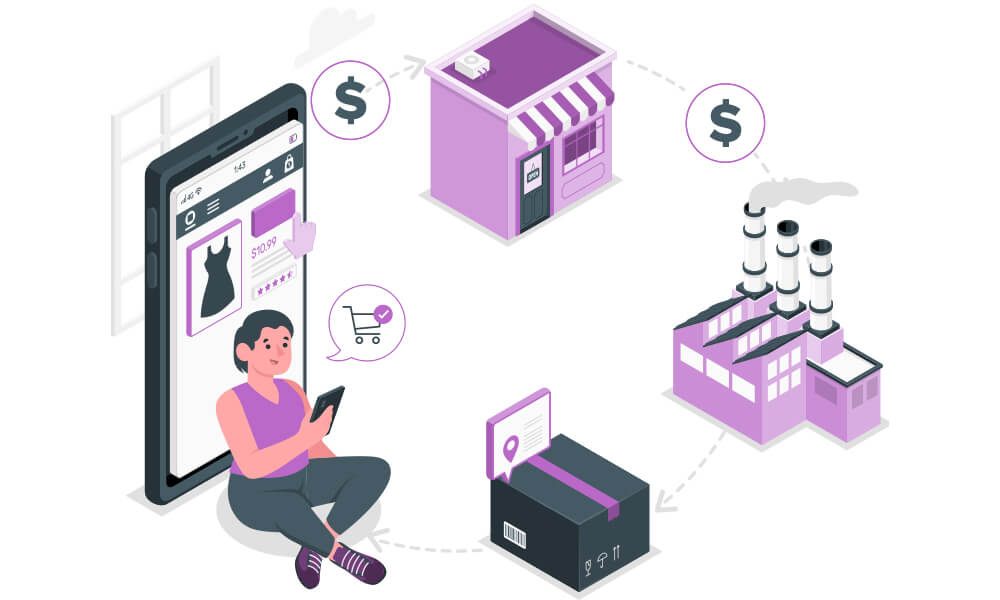
How to Transition from Dropshipping to Arbitrage?
Today, as of July 1, Amazon announced that products listed as FBA for the United States will now be automatically listed in Mexico and Canada as well. In a sense, this means that Amazon has declared it will handle dropshipping listings itself. This implies that dropshipping, as previously done for Amazon Mexico and Amazon Canada, will no longer be possible. For now, this rule applies only to these two marketplaces.
There has been no announcement regarding other marketplaces. In my opinion, Amazon may extend this practice to other country marketplaces as well. This is because the dropshipping business model is one that Amazon has never really liked, but has tolerated. For this reason, preparations should now be made to transition from the dropshipping model to other business models.

By taking a look at our tools that will assist you on our website , you too can achieve easy and comfortable gains in this sector.
So, if you ask which business model you should switch to, let’s quickly review all business models together to find the answer. By analyzing both their advantages and disadvantages, we can determine the most profitable business model.
1. Dropshipping and Arbitrage Business Models
First, let’s start by explaining what dropshipping is. Dropshipping is the practice of listing a product from one marketplace for sale on another marketplace with a profit margin added, without purchasing it in advance. It is often referred to as “stockless e-commerce.”
In this business model, when an order is received, the product is purchased and shipped directly to the buyer (the order owner) by the supplier from whom the product was purchased.
Other prominent business models that can replace this model are Retail Arbitrage and Online Arbitrage. As a product type, private label can also be considered a commercial approach.
With private label, you need to create your own brand. For someone doing dropshipping, building a brand is very labor-intensive and time-consuming. Therefore, private label is not a very suitable business model.
Retail Arbitrage involves physically sourcing products from retail sales channels and listing them for sale in more profitable marketplaces. This can also be done through wholesalers, which in some cases is referred to as Wholesale Arbitrage.
Online Arbitrage involves physically sourcing products from online marketplaces such as Amazon, n11, Hepsiburada, Trendyol, Boyner, and Morhipo, and listing them for sale on marketplaces where profit can be made.
Arbitrage is a model that is open to sourcing products in quantities sufficient for storage. Buying in bulk reduces the unit purchase cost of products; however, this business model requires higher capital. In dropshipping, on the other hand, zero capital is involved. Still, since bulk sourcing is not mandatory, this should not be seen as a barrier.
In the arbitrage model—both Retail Arbitrage and Online Arbitrage—the most important factor is identifying profitable and fast-selling products. Let’s take a closer look at arbitrage.
2. How Is Arbitrage Done?
In this business model, products are sourced either from wholesalers or from marketplaces such as N11, Trendyol, Hepsiburada, Boyner, and Morhipo, and then sold profitably on larger marketplaces such as Amazon, eBay, Etsy, and Shopify.
At this point, you might ask: “Which is more advantageous in e-commerce: Dropshipping or Arbitrage?”
While it is possible to sell by listing a large number of products in dropshipping, arbitrage requires working with fewer products. However, dropshipping has a lower profit margin compared to arbitrage. Dropshipping can be started with low costs and is a low-income, low-profit model.
In arbitrage, returns are higher relative to the investment amount. Dropshipping has relatively low risk since it is a stockless working system, whereas in arbitrage, identifying the right product is the key point.
The most fundamental difference between dropshipping and arbitrage is reliability. In dropshipping, the supplier and the seller are different parties. Problems originating from the supplier negatively affect the seller. In arbitrage, however, there is full control over the order process.
When entering the market with the right products, analyzing the marketplace, competitors, and potential additional costs, and setting the right price, it becomes a sustainable e-commerce model.
Don’t let what I’ve explained about arbitrage intimidate you. Transitioning from one business model to another is, of course, difficult and unsettling. To minimize your concerns, I will explain how you can do arbitrage in the easiest way.
Then you will see that when done correctly, arbitrage is more profitable than dropshipping and is a more sustainable model.
3. MySYS and Arbitrage
Online arbitrage allows you to find profitable and fast-selling products on marketplaces such as n11, Trendyol, Hepsiburada, Boyner, and Morhipo by using the MySYS Chrome Extension. After sourcing the products, you can list hundreds of them on Amazon or eBay with just a few clicks via MySYS Wholesale Analysis.
Retail arbitrage provides you with a product and price list. Having this list in Excel format will make your work much easier. At this exact point, MySYS Wholesale Analysis comes into play again. Your product/price list may contain hundreds, thousands, or even hundreds of thousands of products. Simply upload the file to the system and map the columns to MySYS. MySYS quickly analyzes the products and presents all the data a system can provide. All that remains for you is to filter the products that best fit your commercial strategies. Within minutes, you can find profitable and fast-selling products from crowded lists.
Wholesale Analysis Module calculates purchase prices, purchase/sales tax rates, FBA/FBM shipping costs, and also includes Amazon’s commission fees for each product directly retrieved from Amazon.
With advanced product discovery, listing, sales analysis, and competitor analysis capabilities, as well as stock synchronization between your other marketplaces and stores, you can manage your business more easily and effectively.
With MySYS’s warehouse management, order management , competitor analysis , and stock synchronization services, you can manage all your e-commerce operations quickly and smoothly from a single panel.
You can track and manage orders from Amazon, eBay, Etsy, and Shopify on a single screen. You can bulk-purchase shipping labels for your orders and close these orders on the marketplace side. You can also easily synchronize stock and pricing between your stores.
MySYS Warehouse Management module provides great convenience in storage. Thanks to our warehouses located in Turkey, the USA, the UK, and Germany, you can deliver your products easily and quickly.
CONCLUSION
We are gradually reaching the end of the dropshipping business model. As of July 1, Amazon has initiated this process. In online commerce, Amazon once again sets the rules. What falls to us is to conduct business in accordance with the rules it sets. As you can see, the arbitrage business model is the only viable alternative to the dropshipping business model—especially online arbitrage.
Thanks to MySYS, you can perform arbitrage easily and sustainably. In this way, you can safely continue your e-commerce journey in a different lane.
I recommend reviewing MySYS modules for product discovery, sales analysis, competitor analysis, and warehousing. Moreover, it’s free for 1 month. You can benefit from this system free of charge for up to 1,000 products.
You can follow our important content and the new features we add to MySYS every day.
Don’t forget to subscribe to our newsletter and follow our social media accounts. Wishing you profitable days…
If you wish, you can try the MySYS Analysis Free package, which includes Arbitrage Analysis and the Chrome Extension, free of charge and test product discovery and listing capabilities (No credit card required).
To get free detailed information about MySYS software, you can contact us here .